
In today’s fast-paced digital world, businesses need smarter ways to engage their audience and drive growth. AI tools are transforming digital marketing, helping companies create more effective campaigns, save time, and improve results.
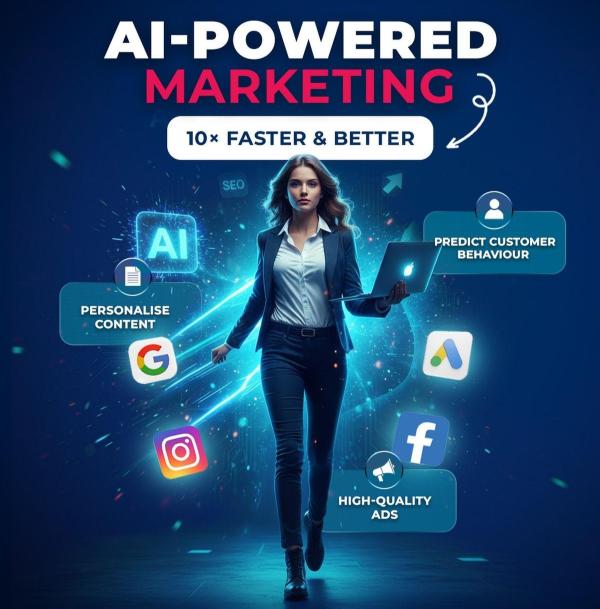
1. Personalized Customer Experiences
AI tools analyze customer behavior such as browsing history, purchase patterns, location, device usage, and engagement with emails or social media. By understanding these data points, businesses can predict what a customer is most likely to need or want next. This allows brands to deliver the right message to the right person at the right time, instead of using generic marketing that may not connect.
Platforms like HubSpot and Salesforce use AI to build detailed customer profiles. These platforms track how users interact with websites, emails, ads, and content. Based on this information, marketers can create highly targeted campaigns, personalized email sequences, and product recommendations. For example, a customer who frequently visits a service page may receive tailored content or offers related specifically to that service.
AI-powered personalization also improves customer satisfaction and loyalty. When users see content that matches their interests, they feel understood and valued. This leads to higher engagement rates, better conversion rates, and stronger long-term relationships with customers. Personalized experiences also reduce marketing waste by focusing efforts only on relevant audiences.
Tip: By combining AI insights with creative expertise, even the Best Graphic Designer & Website Developer in Malappuram can design campaigns that truly resonate with clients.
2. Smart Content Creation
Creating high-quality content regularly can be time-consuming and mentally demanding. This process is made easier by AI-powered platforms like Writesonic, Copy.ai, and Jasper, which enable marketers to create blog posts, social media captions, website content, and ad copy in a matter of minutes. These tools use natural language processing to understand topics, keywords, and tone, ensuring the content remains relevant and engaging.
AI tools also help maintain brand consistency. Marketers can set guidelines such as brand voice, target audience, and content goals. Based on these inputs, AI generates content that aligns with the brand’s identity, saving time while reducing creative fatigue. This is especially useful for small businesses and freelancers who need to produce content across multiple platforms.
Another major advantage of smart content creation is optimization. Many AI tools suggest SEO-friendly headlines, keywords, and content structures, helping businesses rank better on search engines. They can also rewrite or improve existing content, making it more compelling and easier to read.
Advice: Use AI as a creative assistant. The touch of a professional ensures content is engaging and visually appealing.
3. Advanced Social Media Management
AI-powered tools like Hootsuite, Buffer, and Lately AI analyze large amounts of social media data, including likes, comments, shares, saves, and click-through rates. By studying these engagement patterns, AI can identify when an audience is most active and recommend the best posting times. This ensures that content reaches users when they are more likely to interact with it.
These tools also help determine which content formats perform best, such as images, videos, reels, carousels, or text posts. Based on past performance, AI suggests content styles that resonate with your audience, allowing brands to focus on what truly works. In addition, AI-driven hashtag recommendations improve discoverability by selecting relevant and trending hashtags instead of random ones.
Another key benefit is automation and consistency. AI tools allow marketers to schedule posts in advance, respond to basic messages, and monitor brand mentions across platforms. This saves time while maintaining a strong and active social media presence. Some tools also provide performance insights and reports, helping businesses refine their social media strategy continuously.
Example: The Best Graphic Designer & Website Developer in Malappuram can use these insights to schedule posts and craft visually compelling content that grabs attention.
4. Predictive Analytics
AI-driven platforms like Google Analytics 4 (GA4) and IBM Watson analyze large volumes of historical data such as website traffic, user journeys, purchase history, and engagement patterns. By identifying trends and patterns in this data, AI can predict future customer behavior including which users are likely to convert, churn, or show interest in specific products or services.
With predictive insights, marketers can plan campaigns more effectively. For example, GA4 can forecast demand, identify high-value audience segments, and suggest which channels may deliver better results in the future. This helps businesses target the right customers with the right message before competitors do.
Predictive analytics also improves budget and resource allocation. Instead of spending equally across all campaigns, marketers can invest more in high-performing channels and strategies predicted to deliver better ROI. This reduces wasted ad spend and increases overall marketing efficiency.
Impact: Predictive analytics helps businesses make informed decisions and improve ROI without guesswork.
5. Chatbots and Customer Support
AI chatbots such as Drift, Intercom, and ManyChat provide instant responses to customer queries 24/7. They can answer frequently asked questions, share product or service details, book appointments, and even collect customer information. This immediate support improves user experience by reducing wait times and ensuring customers get help whenever they need it.
Beyond basic support, AI chatbots play a key role in guiding users through the sales funnel. By analyzing user behavior and previous interactions, chatbots can recommend products, suggest services, and direct customers to the right pages. For example, a chatbot can engage a website visitor, understand their needs, and pass qualified leads to the sales team for follow-up.
Chatbots also help businesses save time and reduce operational costs. They handle multiple conversations simultaneously, allowing human support teams to focus on complex or high-value interactions. Additionally, chatbots gather valuable data on customer preferences and common issues, helping businesses improve their marketing and support strategies.
Benefit: Companies can provide 24/7 assistance while reducing manual support efforts, improving the overall customer experience.
6. Email Marketing Automation
AI tools like Mailchimp and ActiveCampaign analyze user behavior such as email opens, link clicks, website visits, purchase history, and interaction time. Using these insights, AI automatically segments audiences into different groups based on interests, behavior, and engagement levels. This ensures that each subscriber receives content that is relevant to them.
Personalization is one of the biggest advantages of AI-driven email marketing. Instead of sending the same email to everyone, AI helps customize subject lines, email content, product recommendations, and calls-to-action. Personalized emails feel more human and meaningful, which leads to higher open rates, click-through rates, and conversions.
AI also suggests the best sending times by learning when individual users are most likely to open and engage with emails. This makes emails more visible and less likely to be disregarded or flagged as spam. Additionally, AI-powered tools automate follow-ups, welcome sequences, abandoned cart emails, and re-engagement campaigns without manual effort.
Result: Higher open rates, increased engagement, and better returns for marketing campaigns.
7. SEO and Content Optimization
AI tools like SEMrush, Ahrefs, and Surfer SEO analyze search trends, keyword performance, user intent, and competitor strategies in real time. They help identify high-value keywords, long-tail phrases, and content gaps that businesses can target to attract the right audience. This ensures content is not only optimized for search engines but also aligned with what users are actually searching for.
AI-driven content optimization goes beyond keywords. Tools like Surfer SEO analyze on-page factors such as content length, headings, internal links, and readability. They provide real-time suggestions while writing, helping creators produce SEO-friendly content without compromising quality or user experience.
CONCLUSION
The Best Graphic Designer & Website Developer in Malappuram can optimize websites and content for both performance and aesthetics by utilizing AI, which will increase traffic.
AI is now an essential component of digital marketing and is no longer optional. Businesses may get better, faster, and more significant outcomes by utilizing AI tools to analyze data, automate tedious operations, and improve customisation.